Inventory Management

Product Mapping vs Non-Mapping Explained

PH
Pharamos Team
01 Feb 2026
5 min read
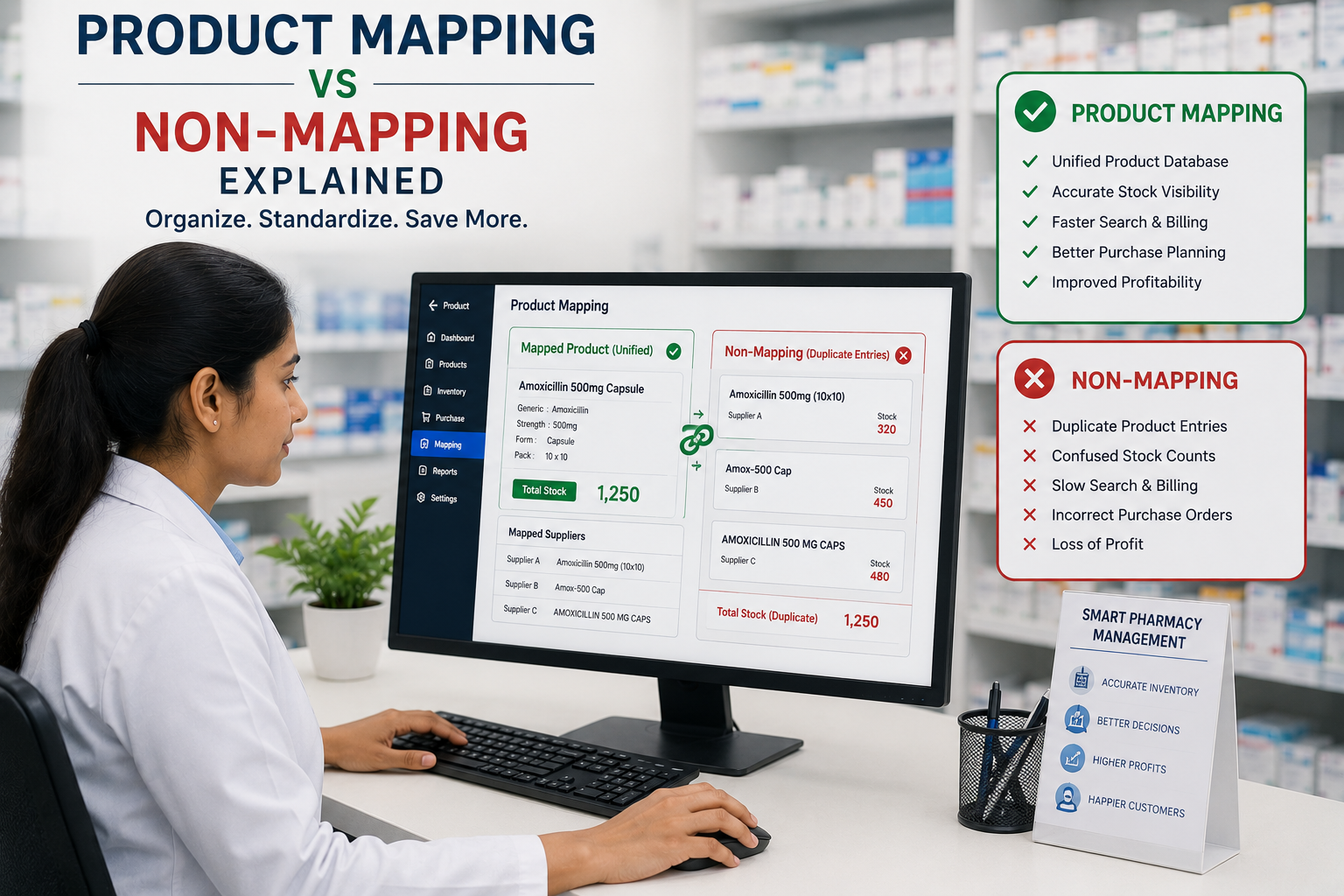
IntroductionIn the pharmaceutical retail and distribution sectors, database organization directly impacts bottom-line profit margins. Managing thousands of unique medicine SKUs require systematic cataloging practices. A frequent technical challenge for pharmacy owners is dealing with inventory data variations when receiving stock from multiple independent suppliers. This deep-dive guide explores the structural differences between product mapping and non-mapping frameworks, highlighting how your database setup influences inventory accuracy and checkout speeds.The Core Problem StatementWithout standard product mapping, a pharmacy database quickly gets cluttered with duplicate records and inconsistent product listings. When you order the exact same medication from three different wholesale distributors, each distributor often uses slightly different abbreviations, layouts, or unique internal product codes on their digital invoices. In a legacy, non-mapping inventory system, importing these invoices creates three separate, isolated line items for the identical medicine. This data fragmentation breaks your unified stock counts, skews your purchase histories, and leads to expensive reordering mistakes.Real-World Operational ExampleConsider a high-volume medical store that tracks a common generic antibiotic. Wholesale Supplier A lists the product as 'Amoxicillin 500mg (10x10)', Supplier B enters it as 'Amox-500 Cap', and Supplier C invoices it as 'AMOXICILLIN 500 MG CAPS'. In a non-mapping software environment, the pharmacy database treats these as three completely independent medications. When a customer stands at the counter asking for the drug, the billing clerk might look up 'Amoxicillin 500mg (10x10)', see zero stock, and turn the customer away, failing to notice that ten boxes are sitting on the shelf under the 'Amox-500 Cap' entry. This data confusion causes lost sales, drives up excess dead stock, and ties up valuable cash flow in duplicated inventory lines.Key Benefits of Structured Product MappingUnified Central Inventory Catalog: Link identical chemical formulations from different distributors to a single, clean master profile.Automated Reorder Point Triggers: Calculate precise safety stock thresholds based on your true total sales volume across all suppliers.Faster Search Speeds at Checkout: Help billing staff find medicines instantly on the first search without sorting through multiple duplicate listings.Consistent, Standardized Retail Pricing: Apply uniform pricing rules and predictable profit margins across identical drug lines automatically.Accurate Product Substitution Advice: Find alternative brands with identical generic molecule formulas instantly to help customers save money.Step-by-Step Data Standardization ProcessStep 1: Set Up a Central Master DirectoryEstablish a clean master directory containing standardized generic formulation data, exact component strengths, manufacturer details, and packaging configurations. This directory forms your single source of truth for inventory items.Step 2: Map Incoming Supplier Data FieldsAs incoming purchase invoices arrive from various distributors, link each supplier's unique product codes and custom descriptions back to the matching entry in your master directory. This step consolidates variant names into one clear profile.Step 3: Implement Barcode Identification RulesLink multiple supplier barcodes and international product numbers to your single master item profile. This ensures that scanning any variation at checkout instantly opens the correct, centralized item entry.Step 4: Run Regular Database Integrity AuditsSchedule a brief weekly review to look for unmapped entries or duplicate rows created by manual data adjustments. Clean up these loose data points promptly to maintain clear business reporting.Proven Best Practices for Database SuccessTo keep your data accurate, restrict database creation and editing permissions to experienced inventory managers or database administrators. This preventative measure stops front-counter billing clerks from accidentally creating new, unmapped product listings during busy store hours. When manual entry is necessary, use standardized naming rules for chemical formulas, dosages, and packaging formats. Make it a regular habit to check your product mapping links before placing large quarterly bulk purchases.Addressing Common Implementation ChallengesThe biggest obstacle when moving away from a non-mapping system is the massive effort needed to clean up an existing, chaotic database containing thousands of duplicate rows. Manually auditing and linking these entries can take weeks of tedious data entry work. You can bypass this challenge by choosing a modern system that features an intelligent, automated data-matching engine. These advanced tools analyze your unstructured product rows, match them by chemical profile and dosage, and group variations under clear master records automatically with minimal manual input.How Pharamos Solves Your Technical ChallengesPharamos eliminates database clutter with an advanced, automated Product Mapping Engine built directly into its core inventory framework. When you import or scan digital invoices from any wholesale distributor, the Pharamos engine automatically processes descriptions, packaging types, and generic composition ratios, instantly linking them to a clean master index profile. This automation stops the creation of duplicate rows, keeping your inventory database completely organized without requiring manual data cleanup. With Pharamos, your billing staff and purchasing managers get a unified, real-time view of actual stock levels, no matter how individual suppliers label products on their invoices. This single source of truth helps your business optimize order quantities, prevent accidental over-ordering, and deliver a fast, professional customer experience at checkout.ConclusionRunning a busy pharmacy with a non-mapping database creates stock confusion, distorts your actual inventory metrics, and slows down operations. Switching to a structured product mapping framework keeps your data clean, simplifies purchasing, and helps you make smarter business decisions based on accurate stock data.Clean Up Your Inventory Database TodayStop letting duplicate inventory records and disorganized product listings slow down your checkout counters and cause reordering mistakes. Switch to Pharamos to take control of your data with intelligent, automated product mapping. Schedule your live system demonstration today to see how Pharamos can clean your catalog and streamline your inventory control.
PH
Pharamos Team
Pharmacy Logistics Writer · Pharamos

Expert in pharmacy management systems, Good Pharmacy Practice (GPP) compliance, and supply chain logistics. Helping pharmacy professionals stay ahead with practical insights on digital transformation and regulatory excellence.

Previous Article
Read previous article
Keep Reading

You might also like

Ready to transform your pharmacy?

Pharamos supports GPP guidelines and GST billing — automate inventory, sync wholesaler pricing instantly, and stay audit-ready every day.