Inventory

Complete Guide to Pharmacy Inventory Management

PH
Pharamos Team
24 Mar 2026
5 min read
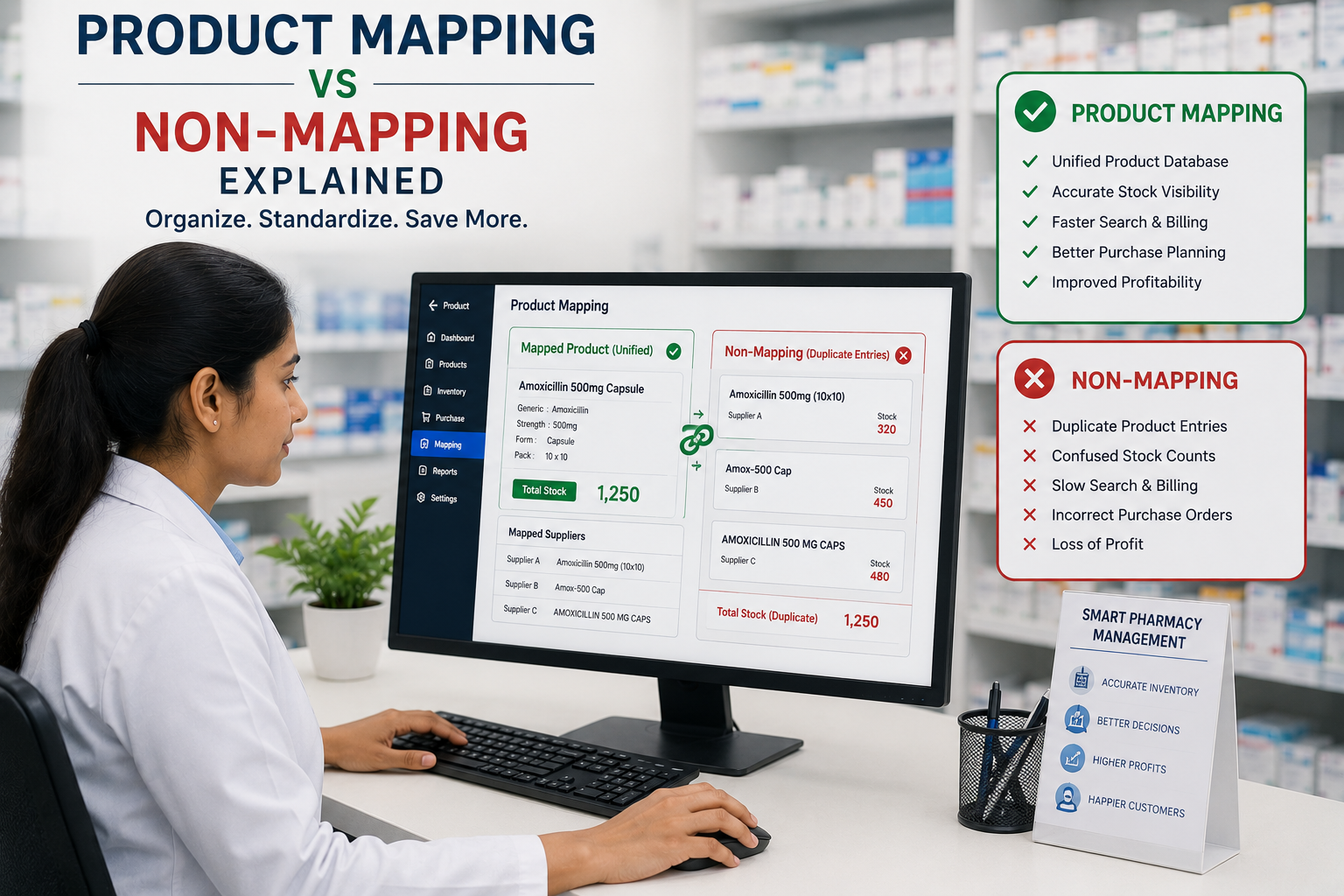
IntroductionInventory represents the single largest financial investment for any retail medical store or wholesale pharmacy operation. Maintaining an optimal balance of stock is essential for business success. Having too little inventory leads to stockouts, missed sales, and disappointed customers, while holding too much inventory ties up vital working capital and increases the risk of stock expiring on the shelves. This comprehensive guide covers proven strategies for managing your inventory, optimizing your stock levels, and keeping your business running smoothly and profitably.The Core Problem StatementMany pharmacy operations rely on reactive, manual inventory methods, tracking stock counts on paper ledgers or basic spreadsheets. This lack of real-time visibility makes it difficult to maintain accurate counts across thousands of unique drug SKUs, distinct batch numbers, and varying expiration dates. Without automated tracking, pharmacy teams often struggle to identify slow-moving items, track short-dated stock, or calculate correct reorder points. This data fragmentation leads to operational bottlenecks, high inventory waste, and reduced cash flow.Real-World Operational ExampleConsider a community pharmacy that manages its stock levels through manual visual checks of the shelves. During a busy week, the team misses that a popular chronic cardiovascular medication has dropped to its last two boxes. By the time they notice and place a rush order with their distributor, the item sells out completely, leaving several regular patients without their daily prescriptions. At the same time, multiple boxes of an expensive specialized cream sit forgotten at the back of a bottom shelf, quietly reaching their expiration date. The pharmacy is forced to write off the expired cream as a total financial loss while losing customer trust due to the medication stockout—double financial damage caused entirely by poor inventory visibility.Key Benefits of Structured Inventory ControlOptimal Stock Level Balances: Maintain the ideal amount of inventory for every product, preventing both costly stockouts and overstocking.Precise Batch and Expiry Tracking: Monitor every item by its specific batch number and expiration date to minimize waste and ensure patient safety.Improved Cash Flow and Capital Efficiency: Reduce the amount of money tied up in slow-moving stock, freeing up capital to invest in growing your business.Faster, More Accurate Stock Audits: Complete inventory counts and audits in a fraction of the time using integrated barcode scanning tools.Data-Driven Purchasing Insights: Base your wholesale orders on accurate, historical consumption data rather than guesswork or intuition.Step-by-Step Inventory Optimization ProcessStep 1: Clean and Categorize Your CatalogBegin by organizing your entire product catalog. Group items into clear categories based on product type, manufacturer, and sales velocity. Make sure every item has a clean name and a unique SKU or barcode associated with it.Step 2: Establish Safe Reorder PointsAnalyze your historical sales data to set clear minimum and maximum stock levels for every item in your pharmacy. These thresholds act as safety triggers, alerting your team to reorder products before they sell out completely.Step 3: Integrate Barcode Scanning WorkflowsEquip your stockrooms and checkout counters with barcode scanners linked directly to your management software. Require staff to scan every item during receiving and sales to ensure your digital inventory levels match your physical shelves.Step 4: Conduct Regular Cycle CountsInstead of closing your store for a massive, stressful annual inventory audit, implement a routine cycle counting schedule. Audit small, specific sections of your inventory each week to catch and correct data discrepancies early.Proven Best Practices for SuccessTo keep your inventory running smoothly, adopt the First-In, First-Out (FIFO) method for stock rotation. Always place newer inventory shipments behind older stock on the shelves to ensure short-dated items sell first. Set aside time each month to review inventory turnover rates, identifying slow-moving items that can be discounted or returned to distributors. Keep your workspace clean and well-organized so your team can find and count products quickly and accurately.Addressing Common Implementation ChallengesThe hardest part of improving inventory management is often the time and effort required to get started. Pharmacists are already busy serving patients, and the idea of spending hours auditing shelves and setting up software can feel overwhelming. You can overcome this challenge by choosing a modern system that simplifies the setup process. Look for a platform that includes a pre-loaded pharmaceutical product database and supports easy barcode importing, allowing you to update your digital inventory quickly without tedious manual data entry.How Pharamos Solves Your Technical ChallengesPharamos turns complex inventory management into a simple, automated process with its advanced Cloud Inventory Engine. The platform features native barcode scanning tools that instantly track stock details down to the specific batch number, manufacturing code, and expiration date during intake and point-of-sale operations. Pharamos uses your live sales data to calculate smart reorder points automatically, sending timely alerts when stock runs low so you can avoid product shortages. The platform's unified inventory dashboard gives you an instant, accurate view of stock levels across all your shelves and storage rooms, helping you reduce excess stock and free up working capital. By automating the tracking and categorization processes, Pharamos eliminates manual spreadsheet updates and helps you run an efficient, waste-free inventory operation.ConclusionManaging a pharmacy inventory manually leads to inaccurate stock levels, expensive product waste, and missed sales opportunities. Upgrading to an automated, cloud-based inventory system keeps your stock balanced, protects your cash flow, and helps you deliver a reliable service to your customers.Take Control of Your Pharmacy Stock TodayStop letting poor inventory tracking tie up your business capital and cause product stockouts. Switch to Pharamos and streamline your operations with our automated cloud inventory management system. Schedule your live demonstration today to see how Pharamos can optimize your stock levels and boost your profitability.
PH
Pharamos Team
Pharmacy Logistics Writer · Pharamos

Expert in pharmacy management systems, Good Pharmacy Practice (GPP) compliance, and supply chain logistics. Helping pharmacy professionals stay ahead with practical insights on digital transformation and regulatory excellence.


Previous Article
Read previous article
Keep Reading

You might also like

Ready to transform your pharmacy?

Pharamos supports GPP guidelines and GST billing — automate inventory, sync wholesaler pricing instantly, and stay audit-ready every day.